Ask most homeowners where their sewer goes and they will say "to the street", and they will be right. Ask where the stormwater goes and the answer is usually a pause.
That is fair enough. Stormwater is buried, it works most of the time, and nobody thinks about it until it stops. But the lots along here were subdivided from 1914 and laid out to follow the topography rather than a grid, because they were sold for the view and the water. On ground shaped like that, where the rain ends up is genuinely not obvious, and it is worth knowing before something makes it urgent.
Start above ground: find every downpipe and follow it to where it enters the ground, then find every pit and grate. Below ground, a camera shows where the lines run and where they discharge. Council records and the property title are the other half of the picture, because on some blocks the legal route matters as much as the physical one.
- Walk the property and find every downpipe and where it enters the ground
- Find every pit and grate, and check the base rather than the surface
- Watch it during heavy rain, once, deliberately
- Camera the lines if you genuinely do not know where they go
- Check the title for any drainage easement, in either direction
On this page
1. Why almost nobody knows
There are three good reasons and none of them are anybody's fault.
The system is buried, so there is nothing to see. It works reliably for years at a time, so there is no prompt to investigate. And on these blocks it was laid out to suit ground that falls in whatever direction it falls, rather than to a standard pattern somebody could guess from the street.
Add in decades of landscaping, paving, extensions and pools built over the top, and the route a property actually uses can be a long way from what anybody would assume.
A plan drawn when the house was built describes what was installed then. Later work does not always get drawn, and sometimes a line has been abandoned rather than removed.
2. Start above ground, because it is free
- Find every downpipe on the building. Count them, and note which face of the house each is on.
- Follow each one to where it enters the ground, or note where it simply discharges onto a surface.
- Find every pit and grate on the block. Lift the grates and look at the base rather than the surface.
- Note where paved areas fall, and whether any of them fall toward the building.
- Find the lowest point on the block, and work out what is there.
- Look for anything that suggests a line crossing a boundary: a pit near a fence, a concrete surround, an inspection lid somewhere odd.
Half an hour with a torch answers more than people expect, and it turns "I do not know" into a specific set of questions worth paying somebody to answer.
3. Then watch it rain, on purpose
Ten minutes outside during genuinely heavy rain will tell you more than any amount of inspection on a dry day, and almost nobody does it.
What you are looking for is where water actually goes, as opposed to where the infrastructure suggests it should. Water crossing a path in a consistent line, a pit that overflows every time, soil washed out of the same garden bed, or a downpipe that backs up at the top are all things that only exist while it is raining.
Photograph it. A set of dated photographs taken during a downpour is genuinely useful evidence, whether the eventual conversation is with a plumber, a neighbour or Council.
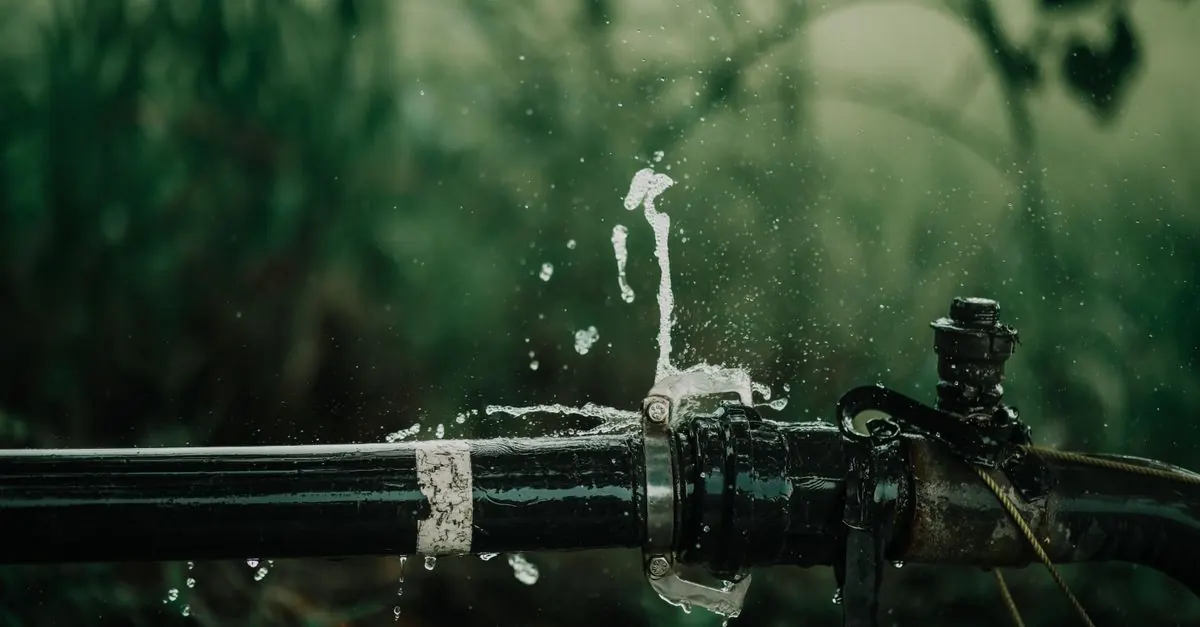
4. Below ground, a camera answers the rest
Once the surface picture is as complete as it can be, the buried part needs equipment. A camera shows where the lines run, what condition they are in, whether anything has collapsed or filled, and where they eventually discharge.
On this ground that last point is the one worth paying for. A property that drains to a recognised drain by gravity has a simple life. One that does not is in a different category entirely, and it is much better to know that as a fact than to find out when somebody is trying to get a project approved.
Ask for the footage rather than a verdict. It is your property, it is your record, and it is worth keeping with the house papers.
5. Check the title, in both directions
On blocks shaped like these, drainage sometimes crosses boundaries legally, by way of an easement registered on title. It is worth knowing whether your property has one, and equally whether it carries one for somebody else.
Both matter. An easement in your favour is the thing that makes a low block workable. An easement burdening your land means somebody else's drainage has a legal right to be there, which is relevant before you build over it, pave it or plant on it.
That information sits in the property documents rather than in the ground, and it is usually in the paperwork from the purchase. Anything about interpreting it is a legal question rather than one for us.
Not sure where your stormwater goes?
We can camera it and show you where the lines actually run and discharge.
6. Why it is worth knowing before you need it
- Before a renovation. Where the water can legally go is capable of stopping a project outright on a block that falls away from the street.
- Before landscaping or paving. Building over a drainage line defers the cost of every future repair rather than avoiding it.
- Before a pool. Same reason, with a larger slab on top of it.
- Before a wet season. Because clearing pits and gutters prevents most of what goes wrong.
- Before selling. A property that can answer these questions is an easier one to sell than one that cannot.
- Before a dispute. Evidence beats argument, and it is much easier to gather when nothing is at stake.
None of that is urgent, which is exactly why it never gets done. It costs one visit and it answers a question that otherwise turns up at the worst possible moment.
- These lots follow the topography rather than a grid, so the drainage route is rarely obvious.
- Start above ground: every downpipe, every pit, and the base of each pit rather than the surface.
- Watch it rain once, deliberately, and photograph what you see.
- A camera shows where the buried lines run and where they discharge. Ask for the footage.
- Check the title for easements in both directions: ones you benefit from and ones you carry.
- Answer this before a renovation, not during one. It is capable of stopping a project.
Where the water goes FAQs
Why does it matter where my stormwater goes?
Because on a block that falls away from the street it decides what you are allowed to build, and because building over a drainage line makes every future repair more expensive. On a block that drains simply to the street, it genuinely does not matter much.
Can you tell where it goes without digging?
Yes. A camera runs the line and shows where it goes and what condition it is in, and the position can be located from the surface. That is the whole point of doing it that way.
What is a recognised drain?
That is Council's definition rather than ours, and they are the authority on it. What we can tell you is whether your property appears able to reach one by gravity, which is the practical question underneath.
There is a pit near my back fence. Whose is it?
Worth finding out rather than assuming, and the title documents are the place that answers it. It may serve your property, it may serve an uphill neighbour under an easement, or it may be shared.
Should I be worried if I do not know?
Not worried. It is worth knowing, particularly before spending money on a project or on landscaping. Most properties turn out to be entirely straightforward, and finding that out is a good outcome rather than a wasted visit.
Can I connect a new downpipe into the existing line myself?
Drainage work is licensed work, and beyond that a new connection can change how the whole system performs. On a block where the discharge route is constrained, adding load to it without checking is exactly the wrong move.