Most people think of stormwater as a detail. It gets designed near the end, it costs what it costs, and nobody expects it to change anything important about a project.
On a block here that falls away from the street, it is not a detail and it is not last. The lots along this stretch of the Georges River were subdivided from 1914 and laid out to follow the topography rather than a grid, because they were sold for the view and the water. A great many of them fall away from the road, and on those blocks the question is not how to drain the property. It is where the water is legally allowed to go.
Sutherland Shire requires stormwater to be disposed of by gravity to a recognised drain, subject to Council approval. Pump-out and charged systems are prohibited except for basement car parks, so the obvious workaround for a low block is not available. Where gravity cannot be achieved and pipes need to cross other properties, a legally created drainage easement is required, and without it a Complying Development Certificate is not possible.
- Establish which way your block actually falls, properly rather than by eye
- Find out where the existing stormwater currently discharges
- If it cannot reach a drain by gravity, raise it before commissioning drawings
- An easement is a legal instrument between owners, registered on title
- Council is the authority on every part of this
On this page
1. Gravity to a recognised drain is the required method
That is the starting position, and on the majority of properties it is also the end of the matter. If your land falls toward the street, the water goes to the street, and you will never think about any of this again.
The requirement matters on the blocks where it cannot be met. Council specifies gravity to a recognised drain as the method, subject to their approval, and the alternatives people reach for are constrained in ways most owners do not discover until they are already committed to a design.
It is worth establishing properly rather than assuming. A long block can fall one way at the front and another at the back, and a driveway can disguise the whole thing.
2. You cannot simply pump it back up to the street
This is the point that catches people, because pumping is exactly what an owner or a builder would propose. It is a normal solution in plenty of places.
In this shire, pump-out and charged drainage systems are prohibited, with an exception for basement car parks. So the standard workaround for a block that will not drain by gravity is not on the table, and a design that quietly assumes it will be is a design with a problem in it.
The practical effect is that a low block cannot solve its stormwater with equipment. It has to solve it with a route, and the route runs downhill.
3. And downhill is somebody else's land
That is the whole difficulty in a sentence. Water that cannot get to the street has to reach a recognised drain some other way, and on ground that falls away from the road the only direction available is across a neighbour.
Where drainage pipes need to cross other properties, a legally created drainage easement is required. An easement is a legal instrument between property owners, registered on title. It is negotiated, it is drafted, and it is registered. It is not something a plumber can arrange, and it is not something that happens quickly.
That timing is the reason this guide exists. An easement is a months-long process depending entirely on somebody else's cooperation, and it is a terrible thing to discover after drawings are commissioned and a builder is booked.
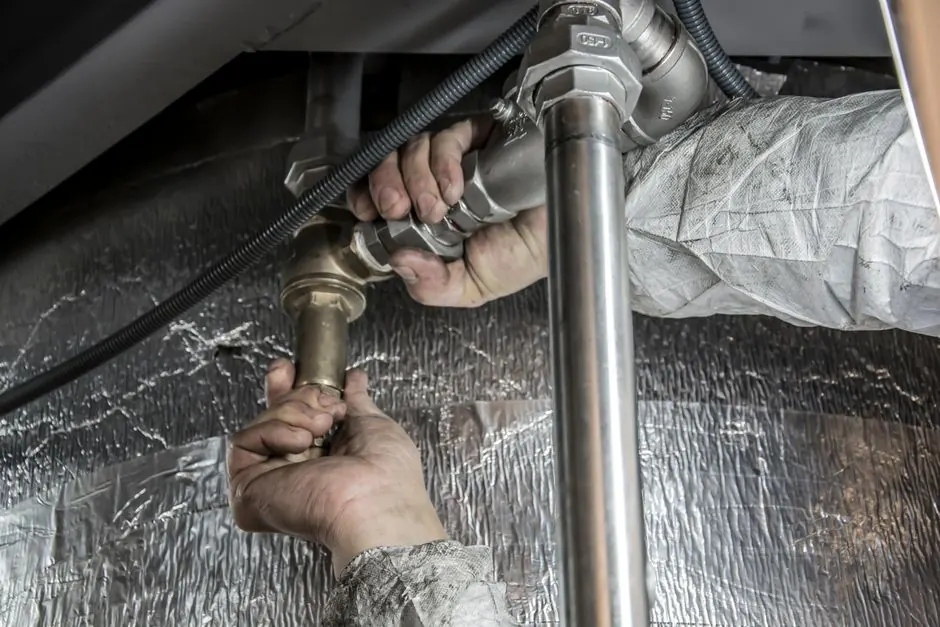
4. Absorption is not the escape route either
The next suggestion is usually to put the water into the ground on your own block with an absorption pit or a level spreader, and avoid the whole question.
Infiltration systems are accepted only in limited cases and must be formally approved by Council. They are not a default option and they are not something to design in on the assumption it will be waved through.
There is also a physical problem, and it is specific to this ground. Infiltration performs worst exactly where these blocks are steepest, because runoff on steep land is fast and it erodes rather than soaking in. So the option is least available in precisely the situation where it would be most useful.
5. Why this can stop a renovation outright
Without the easement, a Complying Development Certificate is not possible. That is the sentence worth sitting with.
It means the drainage question is not a cost item to be resolved at the end. It is a gate. A project that needs an easement and does not have one is not a more expensive project, it is a project that cannot proceed down that path at all until the legal work is done.
And the legal work depends on a neighbour agreeing. Most do, particularly when it is raised early, courteously, and with a clear explanation of what is being asked. Very few respond well to being asked urgently because somebody else's builder is waiting.
Planning something on a block that falls away?
We can tell you whether gravity to a drain is achievable before you commission anything.
6. What we can settle, and what we genuinely cannot
Worth being explicit, because this is an area where a confident plumber can do real harm.
- We can assess how a block actually falls and where the existing stormwater currently discharges.
- We can tell you whether gravity to a recognised drain looks achievable, which is the question everything else hangs off.
- We can do the drainage work once the approvals exist, and say plainly when they do not.
- We cannot grant, obtain or negotiate an easement. That is a legal process between owners and it is registered on title.
- We cannot approve an infiltration system. Council does, in limited cases.
- We will not install a pump-out or charged system to get around it.
The honest version of this job is frequently telling somebody that their next call is to a surveyor, a solicitor or Council rather than to us. That is worth more than a quote for work that cannot lawfully be done.
- The required method here is stormwater by gravity to a recognised drain, subject to Council.
- Pump-out and charged systems are prohibited except for basement car parks.
- Where pipes must cross other properties, a legally created easement is required.
- Infiltration is accepted only in limited cases, and performs worst on the steepest ground.
- Without the easement, a Complying Development Certificate is not possible.
- Raise it before drawings. An easement depends on a neighbour and takes months, not days.
Easements and drainage FAQs
What is a drainage easement?
A legal right, registered on title, allowing drainage to pass across another person's land. It is negotiated between owners and drafted properly, which is why it is a legal process rather than a plumbing one and why it takes time.
Can I just install a pump instead?
Not here. Pump-out and charged drainage systems are prohibited in this shire, with an exception for basement car parks. It is the most common assumption people bring to a low block and it does not hold.
Can I put an absorption pit in and be done with it?
Only in limited cases, and only with formal Council approval. It also performs poorly on steep ground, because fast runoff erodes rather than soaking in, and steep ground is exactly where these blocks need help most.
How do I know which way my block falls?
Properly, it is a survey question. A plumber can tell you a great deal by looking at where the existing stormwater goes and how the ground sits, and that is usually enough to know whether you have a problem worth investigating.
My neighbour will not agree to an easement. What now?
That is a legal and personal question rather than a plumbing one, and it is worth proper advice. What we would say is that the outcome is usually better when it is raised early and reasonably than when it arrives as an urgent demand.
Does this affect a small job, or only a big renovation?
It bites hardest on anything requiring approval, because that is where the certificate matters. For an ordinary repair to existing drainage it is generally not in play. The trouble comes when a project changes where water goes.